Sponsored feature · Editorial standards apply · Advertising policy
Daily Renewal Guide Renewing mind & body after sixty
Brain & Memory
Field Essay · June 2026
Field Essay · 7 min read

I Filled Prescriptions for 40 Years and Knew Every Name by Heart. When My Own Started Slipping, a 12-Minute Sound Helped.

I could recite a regular's medications, allergies, and grandkids' names before they reached the counter. So the morning I blanked on a woman I'd filled scripts for since the eighties, it didn't feel like age. It felt like the one thing I'd never expected to run short on.

An older woman looking calm and clear-headed by a bright window
I spent forty years keeping other people's details straight to the milligram. It took me longer than it should have to notice my own were getting away from me.

For forty years I stood behind the same counter and carried a small town's worth of details in my head — who took what, who couldn't take penicillin, whose new baby had colic, whose husband had just come home from the hospital. Names were the easy part; I never had to try. So the morning a woman I'd filled prescriptions for since the eighties set her purse on the counter and her name simply would not come to me, I felt a cold little drop in my stomach I hadn't felt in years.

It had been building quietly, if I'm honest with myself. A word gone the instant I reached for it. Walking to the back room and forgetting what for. A thick, end-of-shift haze settling in by mid-afternoon that no amount of coffee could cut. I told myself it was just the years adding up — that everyone clouds over a bit past sixty. That's what I kept being told.

But I'd spent a career catching the small thing that didn't add up before it became the big thing. And this didn't read as ordinary to me. It read as something worth taking seriously.

1 in 9
Adults over 45 report a self-perceived decline in memory or clear thinking that isn't explained by another condition, according to the CDC. For most, it begins quietly — and it is remarkably easy to talk yourself out of noticing.
01 The name that wouldn't come

My son teaches pharmacology at the university, and one Sunday I finally told him the whole of it rather than the tidy version. He didn't look worried. He looked interested. "Mom," he said, "how much do you actually know about BDNF?"

He explained it the way I'd once explained a new medication to a nervous customer. BDNF — brain-derived neurotrophic factor — is a molecule some researchers describe as a kind of maintenance crew for brain cells. It helps them keep in touch with one another, which is most of what memory and focus really come down to. And its levels, he said, tend to quietly decline as we age.

"So what raises it back up?" I asked.

"Movement. Proper sleep. And — here's the part you'll enjoy — there's research suggesting a particular rhythm of brain activity may help encourage it. A frequency. Gamma waves."

A frequency. After forty years of measuring everything to the milligram and trusting nothing I couldn't verify, the idea that my own mind ran on a rhythm it had drifted away from stopped me where I stood.
02 What I found when I looked into it

So I did what a pharmacist does with anything new: I went looking for the evidence, carefully. And I was surprised, because none of it was fringe. Researchers have spent decades charting how the brain settles into different rhythms — slow, heavy waves in deep sleep, faster ones when we bear down and concentrate. Gamma waves are among the quickest, and they tend to appear when the mind is alert, engaged, and holding several things together at once.

The core idea. The brain doesn't run on chemistry alone — it runs on rhythm. Whole networks of cells fire together in waves, and different states of mind ride on different frequencies. Some research suggests that gently guiding the brain toward gamma-range activity may relate to the same BDNF signaling tied to learning and memory. The approach isn't a pill and it isn't a device. It's sound — carefully built, listened to for a few minutes a day.

That's when my son mentioned that a team of neuroscientists and audio engineers had taken this exact principle and built it into something anyone could use at home. No clinic. No prescription — which, after forty years of writing them out, struck me as almost funny. A 12-minute audio track, engineered to lead the brain gently toward those gamma frequencies through layered patterns of sound. They call it The Brain Song.

I was doubtful, of course — a career of double-checking labels does that to a person. But there was nothing to swallow and nothing to remember to take. You put on a pair of headphones and press play. That was all of it.

03 How a "song" could possibly help

Here's the picture that finally made it click for me. Strike one tuning fork and hold a second one nearby, and the second begins to ring at the very same pitch — no decision to it, it simply falls into step. The brain does something loosely similar with rhythm: given a steady, well-made pattern of sound, its own electrical activity tends to lean toward that pattern. Researchers call it entrainment. After a lifetime of watching one small, steady thing bring a body back into balance, this didn't feel like such a leap.

🎧
A 12-Minute Daily Listen The whole routine
No program to learn, no schedule to keep. Headphones on, press play, and let one short track do the work — ideally at about the same time each day.
Digital audio · listen anywhere
🔊
Gamma-Range Sound Patterns
The track is layered to guide the brain, gently, toward the faster gamma rhythms that researchers connect with focus, learning, and quick, joined-up thinking.
Grounded in modern brainwave research
🧠
The BDNF Connection Upkeep for the mind
BDNF supports healthy signaling between brain cells. Some research suggests gamma activity may help encourage it — the everyday molecule sitting behind learning and memory.
Neuroscience · published research
🌱
Soothing, Not Stimulating
Most people find the sessions calming rather than keyed-up — something to look forward to, not one more thing on the list. Many pair it with morning coffee or a quiet moment before bed.
Enjoyed at home, in your own chair
Editorial note. The Brain Song is a wellness audio program, not a medical treatment. It is not intended to diagnose, treat, cure, or prevent any disease. If you are noticing significant or sudden changes in your memory or thinking, please speak with a qualified healthcare provider.
04 Three weeks at the kitchen counter

I started on a Monday, at the kitchen counter, with coffee and a decent pair of headphones. Twelve minutes. I kept notes, because forty years of initialing logs doesn't wash out of you.

Log · Week 1

Agreeable. Quieter in my head than I expected — like the store after the last customer leaves and you finally lock the door. Far too soon to say anything. Noted it anyway.

Log · Week 2

The late afternoons feel lighter. That end-of-shift haze didn't settle the way it usually does. Could be nothing. Even so, I marked it down.

Log · Week 3

Saw a former customer at the pharmacy counter — from the other side, for once — and her name arrived the moment I saw her, first time in months. My daughter said I seemed quicker on the phone. I hadn't told her I'd started a thing.

I'm careful about what I'll claim outright. I counted pills; I'm not a researcher, and three weeks is three weeks. But I feel clearer than I have in a good long while, the routine costs me twelve quiet minutes a day, and I don't intend to stop.
The fog didn't lift all at once. It cleared the way the shop used to settle after a long rush — you never notice the exact minute it goes quiet, you just look up and find the counter clear.
Featured in this essayDigital · instant access
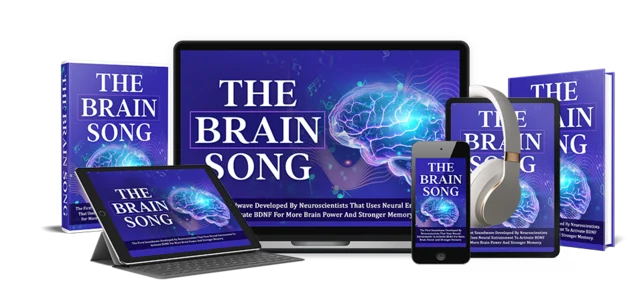
The Brain Song — digital audio program shown on laptop, tablet, phone and headphones

The Brain Song — Tune Your Brainwaves for a Sharper, Steadier Mind

★★★★★
4.7 average · 2,900+ listeners

A simple, 12-minute digital audio built where neuroscience meets sound — designed to lead the brain gently toward the gamma rhythms tied to focus, learning, and memory. Delivered instantly, backed by a 60-day money-back guarantee.

$39 / one-time · lifetime access
Instant digital download — listen today
Listen to The Brain Song
Digital audio program · results vary · 60-day money-back guarantee
🎧 Just press play⚡ Instant access↩ 60-day guarantee📱 Phone, tablet & PC

Background & further reading

  1. Brain-derived neurotrophic factor and its role in learning and memoryPMC / NCBI
  2. Gamma oscillations and their association with cognitive functionPubMed
  3. Auditory rhythmic stimulation and neural entrainment: a reviewPMC / NCBI
  4. Music, sound and the aging brain: cognitive and emotional effectsFrontiers in Neuroscience
  5. Sleep, exercise, BDNF and brain plasticity in older adultsPubMed
Reader notes
263 responses · sorted by most helpful
EJ
Ed J.
Wichita, KS · ✓ Verified · 3 days ago
★★★★★

The end-of-shift haze Margaret describes was every one of my afternoons. Twelve minutes with headphones after breakfast became the calmest part of the day. Three weeks in, my daughter said I seemed "more with it" on our calls — and I hadn't told her I'd started anything.

BW
Barbara W.
Springfield, MO · ✓ Verified · 5 days ago
★★★★★

I've bought supplements and apps and forgotten to use every last one. A 12-minute track I actually look forward to? That one sticks. The 3pm wall I'd made peace with started easing after a couple of weeks. Simple, and honestly soothing.

HG
Harold G.
Akron, OH · ✓ Verified · 1 week ago
★★★★☆

Retired bookkeeper, skeptic to the core. Came in expecting nothing and it's been running every morning for two months. Can't hand you a brain scan — can tell you my word-finding is clearly better. Four stars and a fixed spot in my routine.

JS
Joan S.
Louisville, KY · ✓ Verified · 1 week ago
★★★★★

I set it up for my husband of 74 without making a fuss about it. Three weeks later he called me from the pharmacy, of all places — he'd remembered the whole list without his phone, first time in ages. He puts the headphones on himself now. Had to tell someone.